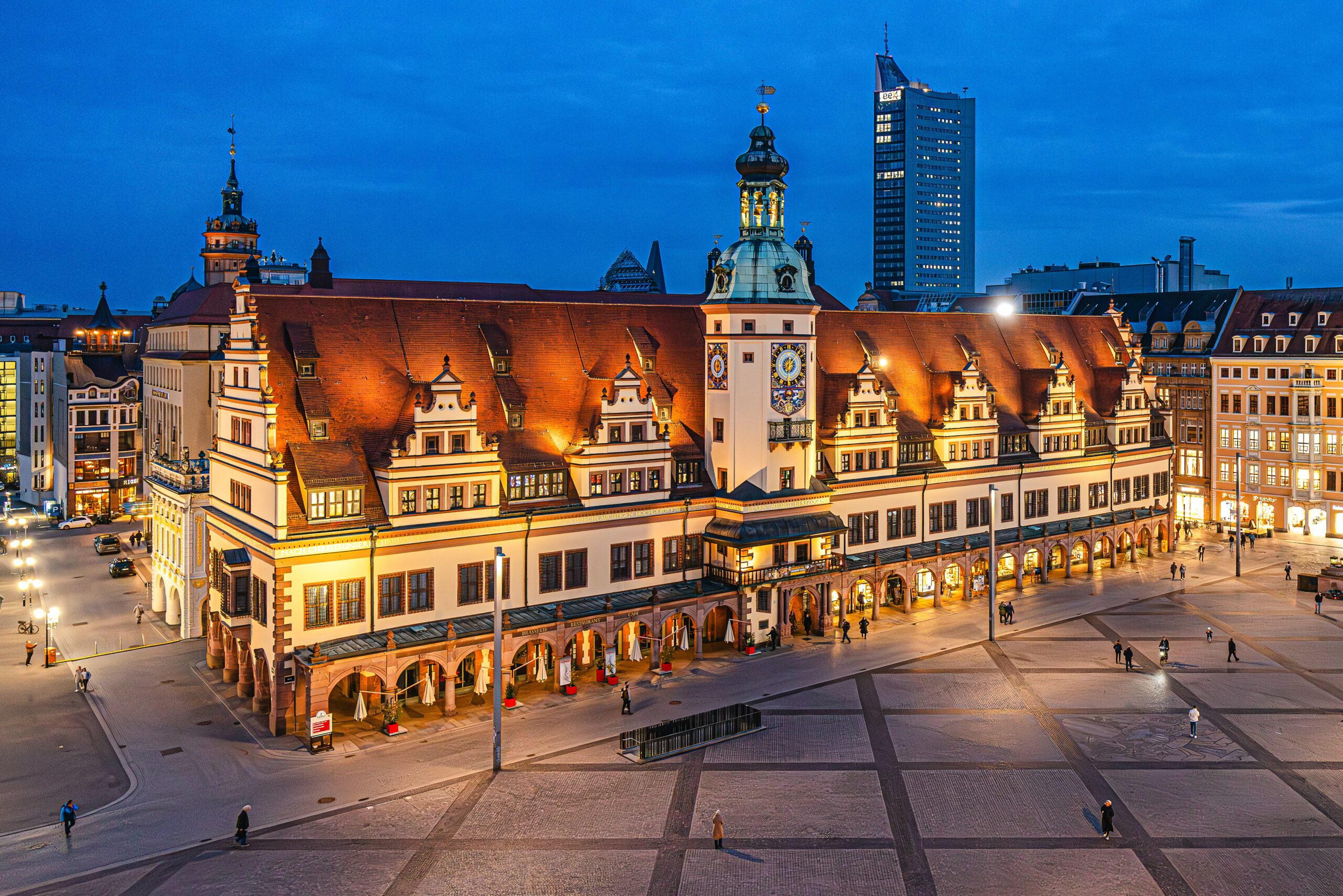
Written by Jamie Kaup with Linda Grabowski
Leipzig has always been a city where greatness lingers, in its concert halls and museums, its churches, and, as it turns out, at its restaurant tables. Long before it became one of Europe’s most musical cultural capitals, Leipzig was already drawing the curious, the brilliant, and the revolutionary to its taverns, coffeehouses, and cellar dining rooms. Goethe found his muse here in a wine-soaked cellar. Luther broke bread here on the eve of one of Christianity’s most defining confrontations. Bach pulled up a chair for his morning coffee. Schumann could barely be dragged away from his favorite seat. Leipzig’s restaurants are not simply places to eat, they are living monuments, where centuries of history have settled comfortably into the woodwork, and where the ghosts of poets, composers, reformers, and emperors have never quite left the table. Please enjoy and be sure to visit and experience the history for yourself!
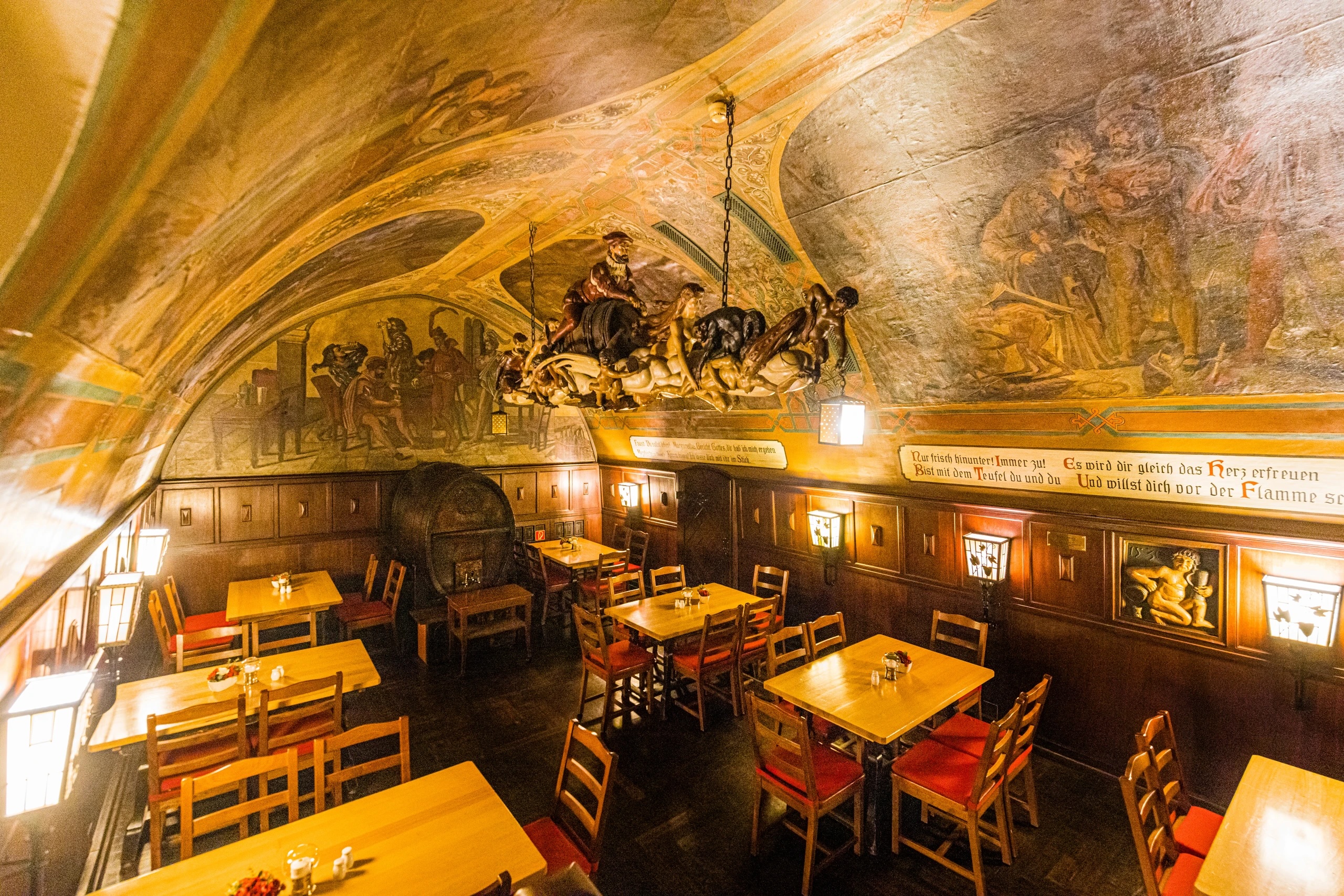
Auerbach’s Cellar: Where Goethe Found His Devil
Johann Wolfgang von Goethe arrived in Leipzig in 1765 as a law student and became a devoted regular of this cellar tavern. It was here that he encountered two 1625 paintings depicting the legend of Dr. Faustus, a magician said to have ridden a wine barrel out of the cellar on the devil’s power. So captivated was Goethe that he immortalized the tavern in his masterwork Faust, Part I, making Auerbach’s Cellar the only real place explicitly named in the play. The restaurant today features a dedicated Goethe Room where that fateful inspiration took hold, and bronze Faust sculptures by Mathieu Molitor stand guard at the entrance. Martin Luther and Friedrich Schiller also counted themselves among its illustrious guests. When Martin Luther visited Leipzig in 1519 for the famous Leipzig Disputation, the city was already known for its lively inns and taverns. These establishments were not only places to eat and drink, but also important meeting points for scholars, merchants, and theologians.
The historic cellar and once student bar is located in the famous Mädler-Passage in Leipzig’s city centre and serves classic, hearty Saxon dishes. Expect beef roulades, sauerbraten, braised ox cheeks in red wine sauce, roast wild boar, and venison haunches, all accompanied by red cabbage and potato dumplings. The Leipziger Quarkkäulchen (curd fritters) make a beloved dessert. An extensive wine list and regional Schnapps round out the offering. The cavernous Großer Keller (“Large Cellar”) seats 600, while intimate historic wine rooms — the Barrel Cellar, Goethe Room, and Luther Room — seat up to 150. The accompanying “Mephisto Bar” allures guests with cocktails and live music. Every Thursday at 8:30pm, a resident “Mephisto” actor performs, conjuring the spirit of Faust’s famous cellar scene.
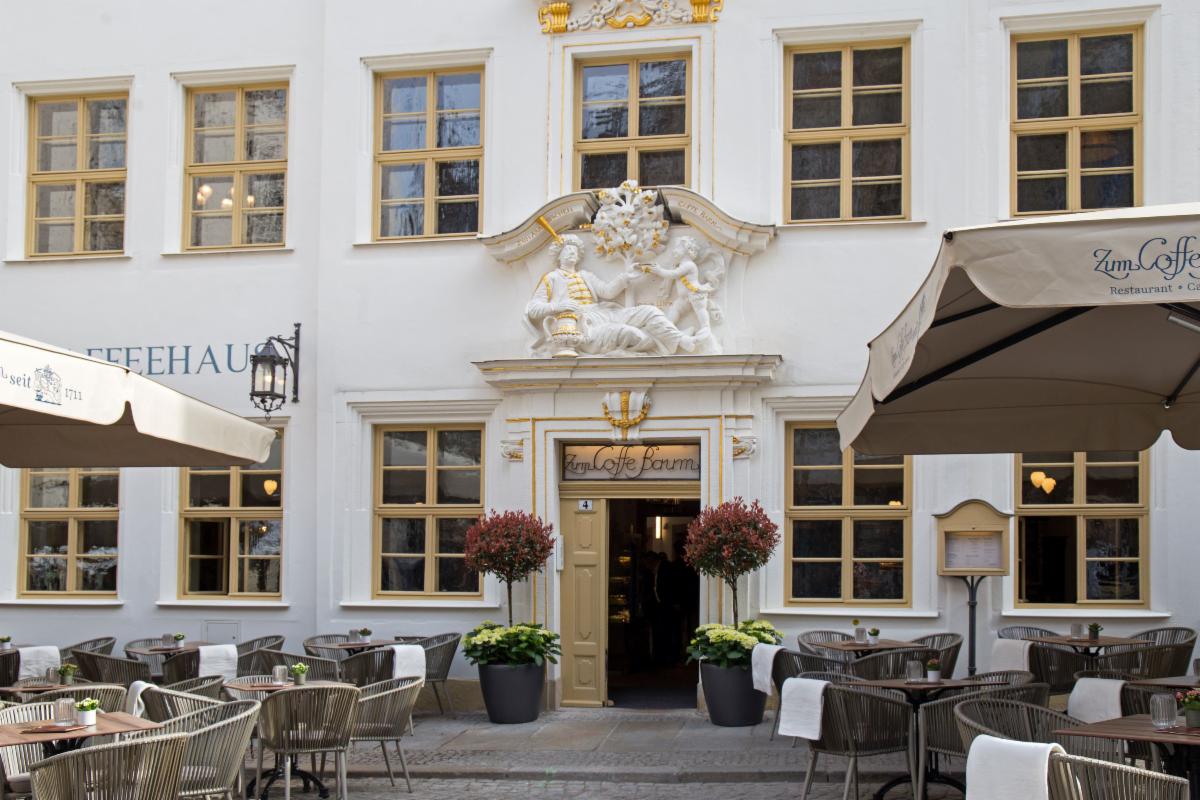
Zum Arabischen Coffe Baum: The Coffeehouse That Refused to Let Genius Leave
Saxons have long had the nickname “Kaffeesachsen” (Coffee Saxons), reflecting their long-standing and distinctive coffee culture. When Johann Sebastian Bach served as Leipzig’s Thomaskantor in the 18th century, coffee culture was flourishing. One of the most important coffee houses of that era — and still operating today — is Zum Arabischen Coffe Baum (translated as “The Arabic Coffee Tree”). Robert Schumann made this baroque coffeehouse his unofficial second home. From 1833 onwards, he and his fellow Davidsbündler, the artistic circle he founded to combat musical philistinism, gathered weekly at their regulars’ table in what is now called the Schumann Room, where a plaque still marks his favorite chair. Local legend says an exasperated Clara Schumann occasionally had to come in and physically drag him away from it. But Schumann was far from alone in his devotion: Johann Sebastian Bach visited so regularly that the coffeehouse inspired his celebrated Coffee Cantata; Goethe, Wagner, Liszt, and Napoleon have all pulled up a chair here across three centuries.
Founded in 1711, it is considered one of the oldest coffee houses in Europe. Today, visitors can enjoy traditional Saxon cakes and coffee specialties while immersing themselves in centuries of history. Just as coffee has a firm place in the regional culture of the “Kaffeesachsen”, sweet treats and cakes are also a staple here. The best-known sweet pastry is the “Leipziger Lerche” – a small shortcrust pastry basket filled with a dollop of jam and marzipan, topped with the characteristic cross made from strips of pastry. Architecturally, this designated baroque monument features three elaborate floors that include French, Arabic, and Viennese salon rooms. The upper floors house a 16-room museum charting 300 years of Saxon coffee culture. Classical coffeehouse preparations alongside cakes and Saxon pastries are served. Savory dishes include Leipziger Allerlei (seasonal vegetables with crayfish), braised beef roulade, confit cod, Wiener schnitzel, and housemade Grützwurst. Regional Gose beer and an excellent Saxon wine selection complete the table.
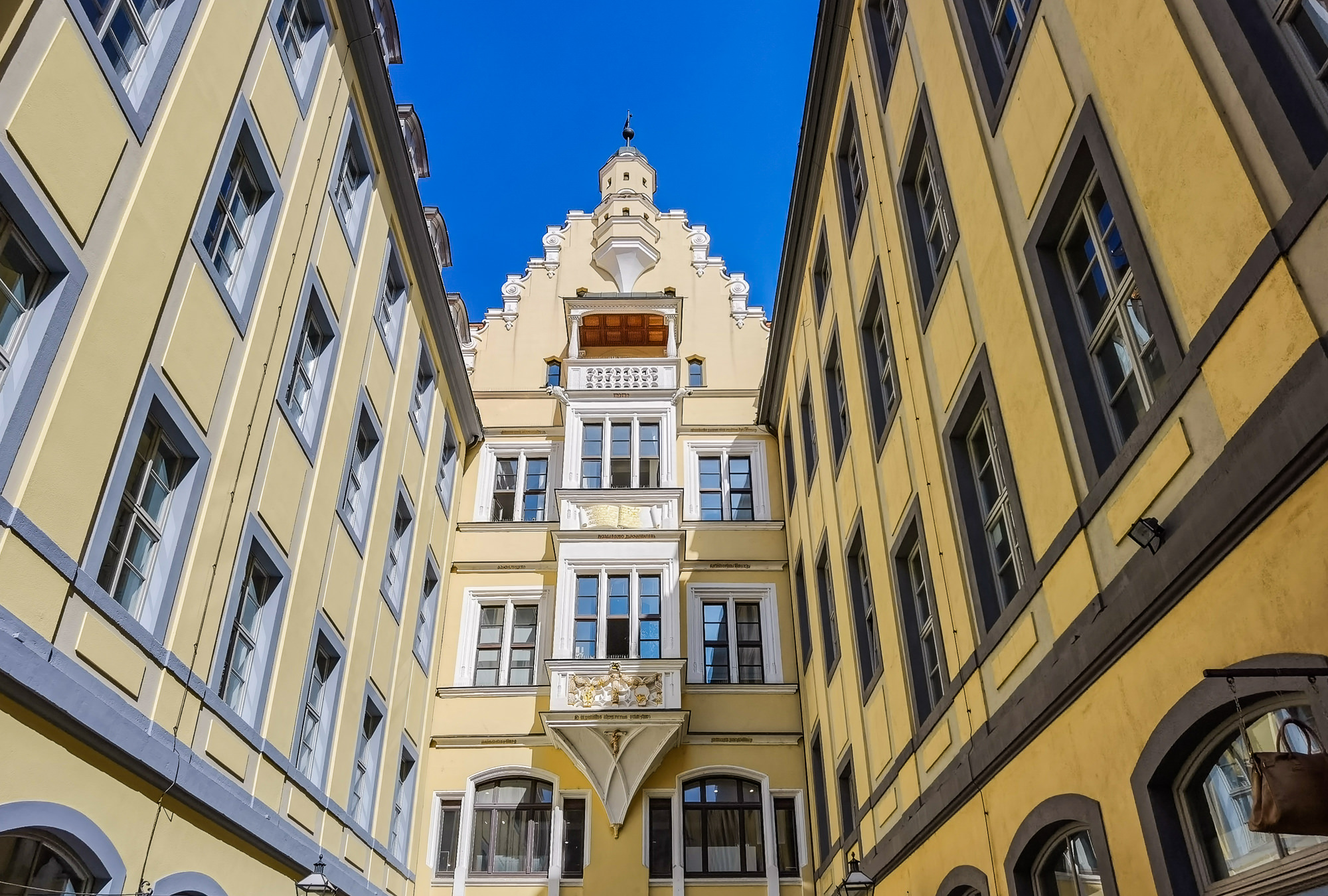
Barthels Hof: The Heart of the Trade Fair City
In the 18th century, so-called “trade fair courtyards” were a hallmark of Leipzig, the city that hosted Germany’s oldest trade fair and attracted merchants from around the globe. These courtyards functioned both as trading hubs and as accommodation. By day, business was conducted, deals were negotiated, and new connections were made. In the evenings, successful agreements were celebrated in style—most notably at the Barthels Hof inn. Today, Barthels Hof is considered one of Leipzig’s oldest and most traditional restaurants, where the city’s rich history meets contemporary culinary variety. To understand Leipzig’s identity as a Messestadt. or trade fair city, in full, one must visit Barthels Hof firsthand. Built between 1747 and 1750 by architect George Werner for the merchant Gottlieb Barthel, it stands as the last surviving baroque Durchgangshof — a “through courtyard” preserved nearly in its original condition, where carts once drove in, unloaded their goods, and drove straight out the other side.
That same site had since 1523 been home to the Leipzig outpost of the Welser banking dynasty, one of the most powerful merchant families of the era, making Barthels Hof an early witness to the long-distance trade that would define the city for centuries. The young Johann Wolfgang Goethe, who arrived in Leipzig in 1765, is said to have been among those who passed through its doors, a fitting detail for a place that has always sat at the intersection of commerce and culture. Today, the restaurant honors that legacy through its kitchen, serving Saxon classics like Leipziger Rinderroulade alongside a special menu called “1,000 Years of Leipzig,” designed to guide diners through the full sweep of local culinary heritage.
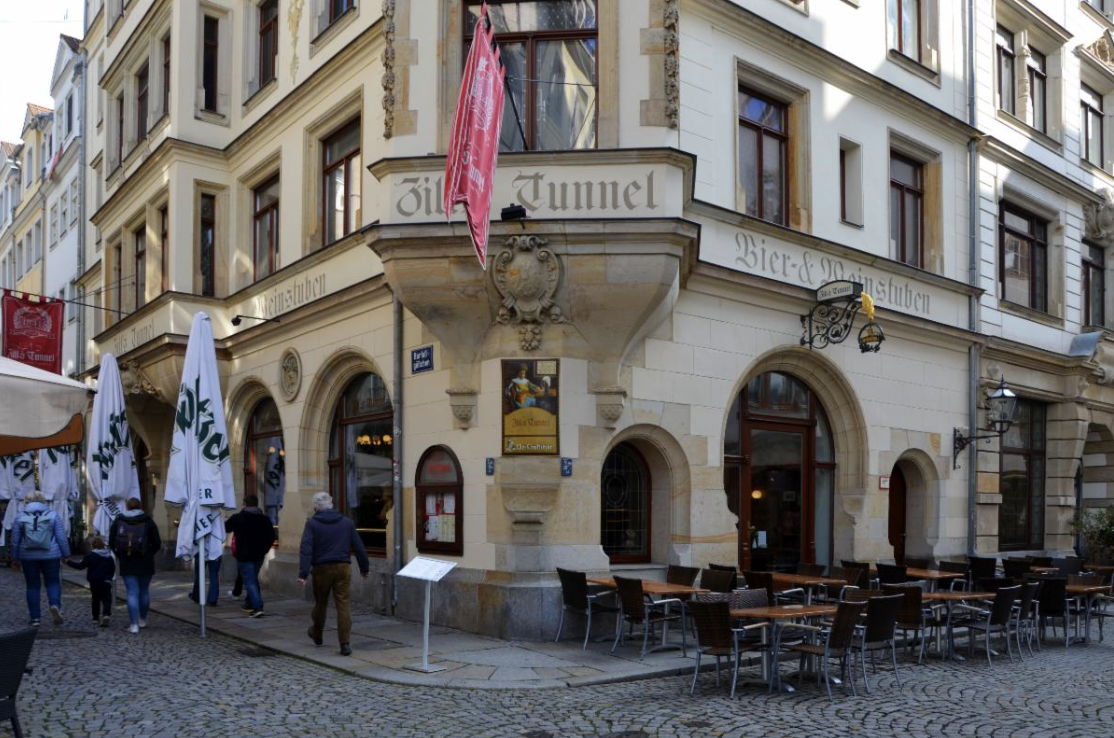
Zill’s Tunnel: The Pub Where a Folk Classic Was Born
Tucked into Leipzig’s lively pub alley Barfußgässchen, Zill’s Tunnel occupies a lovingly restored 1888 building with stone vaulted ceilings, the “tunnel” that gives the place its name. Composer Carl Friedrich Zöllner was such a fixture here that his most beloved song was born between these stone arches. The folk classic “Das Wandern ist des Müllers Lust” (translated as “To Wander is the Miller’s Joy”), still sung by German schoolchildren today, is said to have been conceived during a stay at Zill’s Tunnel around 1844. According to local legend, Zöllner once boasted he could set any text to music; challenged by regulars to compose a setting of the restaurant’s own menu, he returned the next morning with a complete piece titled “Der Speisezettel” (translated as “The Menu”). Zöllner also brought his friends to his favorite table: Felix Mendelssohn Bartholdy and Robert Schumann both dined here as his guests, making this small pub a quiet crossroads of Leipzig’s musical golden age.
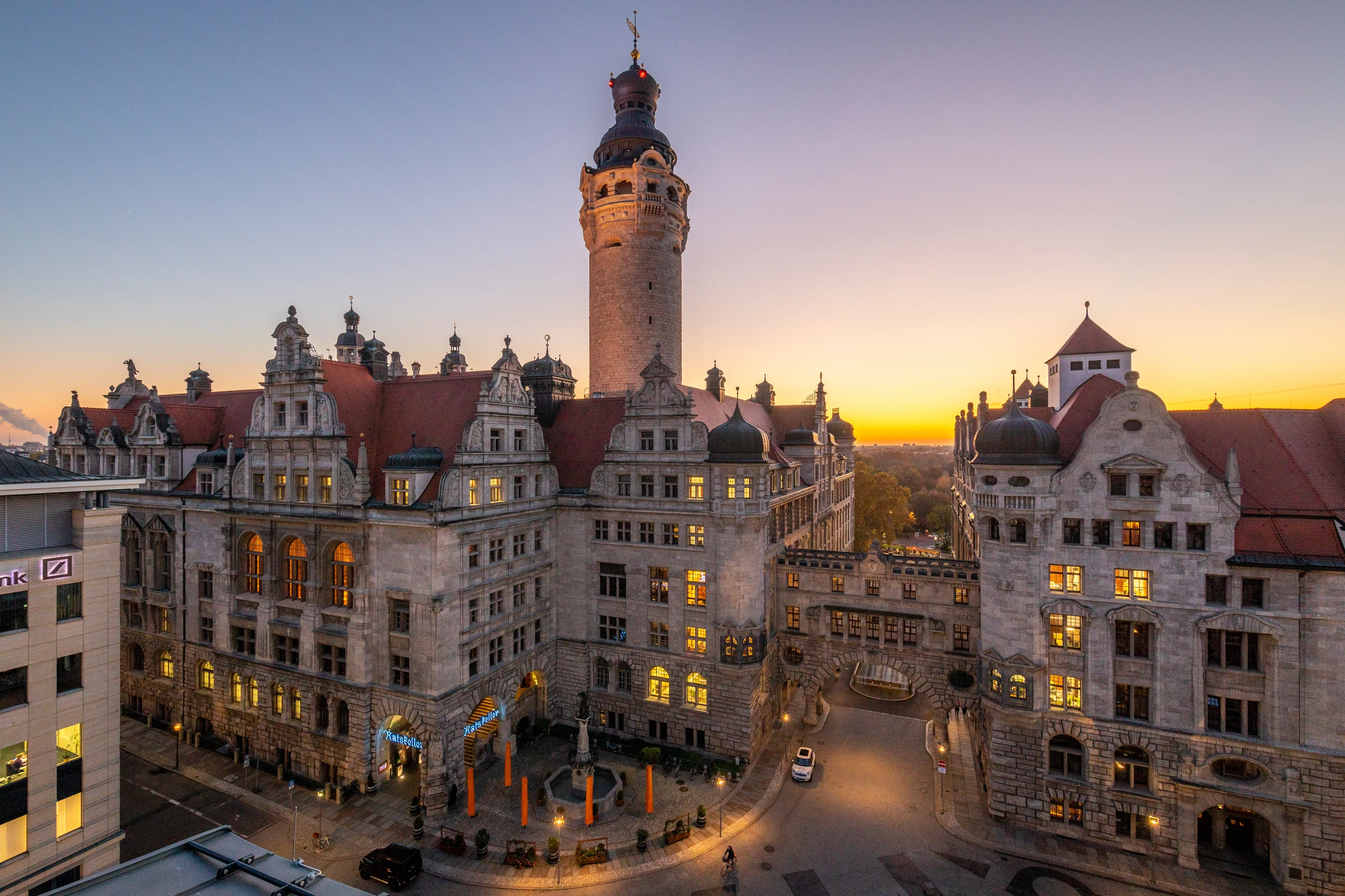
Ratskeller: Seven Rooms, Seven Centuries of Greatness
Possibly saving one of Leipzig’s most expansive establishments for last, the Ratskeller sits beneath the impressive New Town Hall, which was constructed atop the old Pleißenburg fortress. Since opening in 1904, the Leipzig Ratskeller has stood as one of the city’s most historic restaurants. Spread across seven vaulted rooms accommodating up to 700 guests, the restaurant is a feast for the senses before a single dish arrives: the entrance is watched over by a statue of Bacchus, the god of wine while the interior is distinguished by rustic oak benches, torch-lit walls, and toasts engraved on arched ceilings. The menu stays true to its roots, serving hearty regional classics, braised meats, rich stews, and roasted pork, accompanied by local wines and beer brewed right on the premises in the restaurant’s own in-house brewery. But the Ratskeller’s most remarkable claim to fame lies in its grandest room: the Gewandhaussaal, which once served as a rehearsal and performance space for the legendary Gewandhaus Orchestra of Leipzig — an ensemble forever linked to giants of classical music including Felix Mendelssohn Bartholdy, Clara and Robert Schumann, and Johannes Brahms. Another room, historically known as the Bachsaal, pays homage to Leipzig’s most celebrated son, Johann Sebastian Bach. To dine at the Ratskeller is, quite simply, to share a table with history.